An absent work system that still works in November
A student walks in on Thursday and asks the question every teacher has heard a thousand times: “Did I miss anything?” The honest answer is always yes. An absent work system is just a way of having that answer ready before they ask — so it does not get worked out at the door, two minutes before the bell, with twenty-nine other people waiting.
Below is a routine with five small pieces. Most of them take seconds, and none of them depend on you remembering who was away on a Tuesday three weeks ago.
Why most absent work systems break by November
In September the absent bin looks great. There is a labelled tray for each day, a stack of spare worksheets, a laminated sign. By November it is a heap of unnamed handouts from four different lessons, and the student who comes back after a week away is handed a fistful of paper with no idea what order it goes in or which bits matter.
Two things go wrong. The first is that the system relies on the teacher doing something afterthe lesson — finding the spare copies, remembering who was away, writing the names on. That is the moment you are tidying up, answering an email and walking to the next room, so it is the moment it gets skipped. The second is that a folder holds what was handed out, never what was said. The worksheet makes sense to the twenty-eight students who heard the explanation. To the one who did not, it is a page of questions about something they have never been taught.
And absence is not rare. Nat Malkus at the American Enterprise Institute put the national chronic absenteeism rate at 26 percent for 2022–23 — that is, about one student in four missed at least a tenth of the school year. In a class of 30, that is seven or eight students who will each be away for around 18 days or more. Your absent work routine is not an edge case. It is something a quarter of the class depends on.
The four questions every returning student has
Strip it back and a student who missed a lesson needs four things answered. If your system answers all four without you, it works. If it answers one, you are the system.
- What did we do? One sentence, not the whole lesson plan.
- What do I need to do? The actual task, with page and question numbers.
- By when? A day, not “soon”.
- Who can I ask? A classmate who took good notes, and when you are free.
The five pieces
1. A named copy, set aside in the lesson
When you hand out paper, count the empty chairs and write those names on the spare copies there and then, before they go anywhere. Then they go in one place: a hanging file per class, a tray per period, a labelled folder by the door — whichever you will actually use. This one habit is the difference between a folder that works and a pile of anonymous paper. It costs about ten seconds, and it is the only time all lesson that you know for certain who is not there.
2. Notes, not just handouts
The worksheet is not the lesson. The explanation, the worked example on the board and the mistake half the class made and you corrected — that is the lesson, and none of it is in the folder. A page of notes closes most of that gap: what the topic is in a sentence, the steps, one worked example, the thing people get wrong.
You do not need to write these from nothing. If you taught from slides, a textbook page or your own planning notes, the notes are mostly there already; they just need to be readable by someone who was not in the room. And they are not only for the absent. The students who were there will use them to revise, which is a good reason to put them somewhere everyone can find them, the same day.
A useful test: could a student who missed the lesson do the first three questions of the task using only the notes? If not, the notes are missing the worked example.
3. The slip, filled in by a student
Give one student in each class the job of absent buddy for a few weeks at a time. During the last few minutes, while everyone packs up, they fill in the half-sheet for anyone who was away: what we did, what to do, by when, who to ask. You glance at it on the way past and clip it to the named copy. Rotating the job matters: everyone takes a turn, and everyone knows someone will do it for them when they are the one away.
4. One deadline rule, published once
Most of the chasing comes from vague deadlines. Pick a rule, put it in your first-week letter and on the wall, and apply it the same way every time. A common one is a lesson to catch up for each lesson missed: miss Tuesday, hand it in by Thursday. Check your school’s handbook first — many schools set the rule for you, and a class rule that contradicts it will lose the argument with a parent.
5. The two-minute check-in on the day back
This is the only step that needs you. While the rest of the class does the starter, catch the returning student for two minutes: hand over the slip, ask one question about the notes (“what’s the first thing you do when the bottoms don’t match?”), and agree what they will do today. Two minutes on day one saves a week of “I didn’t get it” later.
The system works when it answers the four questions before the student reaches your desk.
It starts at the register
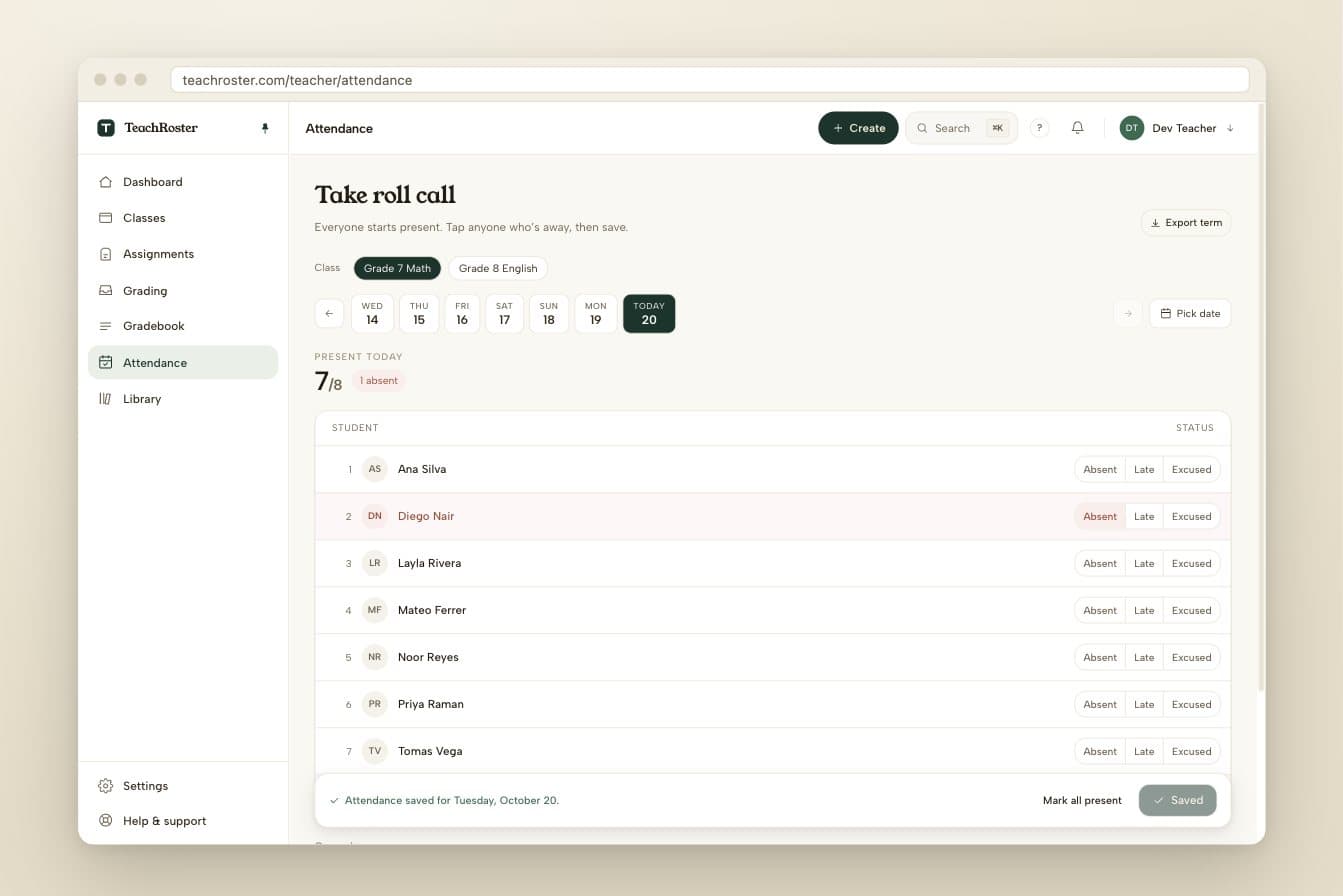
Every one of those steps starts with knowing who was away, and the only reliable moment to know that is the start of the lesson. If roll call is quick — everyone marked present, then you tap the two or three who are not — the list of who needs a named copy, a slip and a check-in is sitting in front of you before you have handed anything out.
With five classes a day
Everything above is manageable with one class. With five sections and 150 students the paper side starts to fail, because you cannot carry five folders around and talk to every returning student at the door. The fix is to move as much as possible to one place online, the same day, and keep the conversation for the students who need it.
- One place per class, always the same. Not the learning platform for some things and email for others. Students check one place before they ask you.
- Post the notes and the task the same day. A student who was ill on Tuesday can read them on Tuesday evening and arrive on Thursday already half caught up.
- Keep paper for paper. A tray per period for the named copies of anything that has to be done by hand.
- Check-ins by exception. Ask returning students to read the notes first and come to you only with a specific question. The two minutes go to the ones who are actually stuck.
Folder, class website or app
There is no single right tool, and a mix is normal: paper for handouts, something online for notes. Here is how the common options compare on the four questions.
| Option | Answers | Works with | Breaks when |
|---|---|---|---|
| Absent folder or tray | What to do (if the copy is named) | One or two classes, lots of paper | Copies go in without names, or a week of absence piles up |
| Absent buddy and slip | All four, in a student's words | Any age; better with a rotating job | Nobody owns the job, or the slip never reaches the folder |
| Class website or learning platform | What we did, what to do | Older students, several sections | It is updated on Fridays, not the same day |
| Notes assigned in an app | What we did, what to do, by when | Students with a phone or a shared device | The notes are just the worksheet again |
Four things that make it worse
- Turning absence into a penalty. A zero for missing a lesson teaches a student that being ill is a grading problem. Let the deadline do the work instead.
- Handing over a stack with no explanation. Five worksheets with no notes is a punishment for having had the flu.
- “Copy a friend’s notes” as the whole plan. Some friends take excellent notes. Most take notes for themselves, which skip the parts they already knew.
- Waiting for the student to ask. The students who most need catching up are the least likely to ask. The check-in has to come from you.
Doing it with TeachRoster
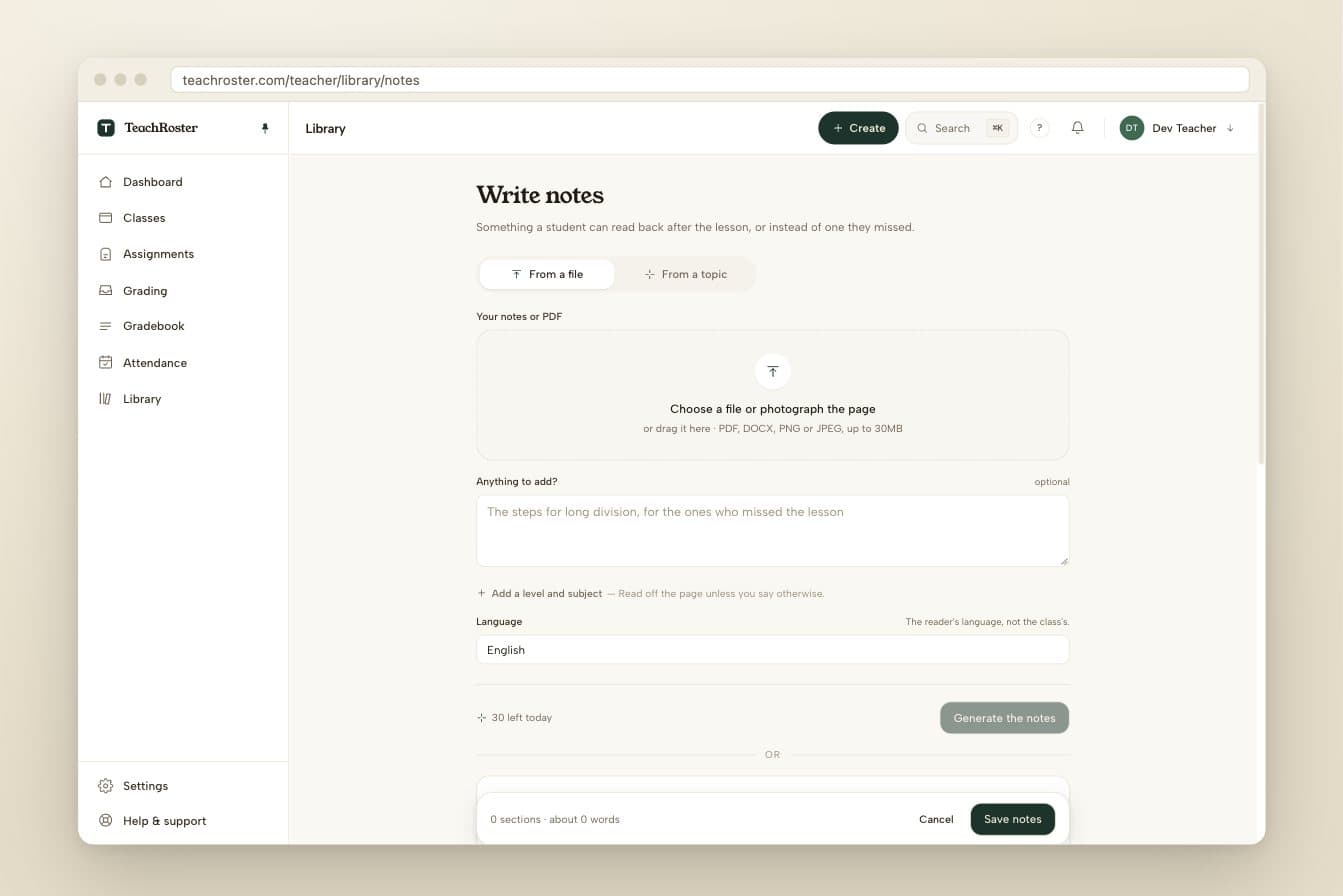
I build TeachRoster, so take this section as a description rather than a review. Two parts of it fit this routine. Roll call is the register above: everyone starts present and you tap who is away. And lesson notes are meant for exactly this job — a page a student can read back after the lesson, or instead of one they missed.
You can write the notes yourself, or upload the PDF, Word file or a photo of the page you taught from and get a draft to edit. Nothing reaches students until you assign it, and you can add a line on top of the notes saying what to do and by when.
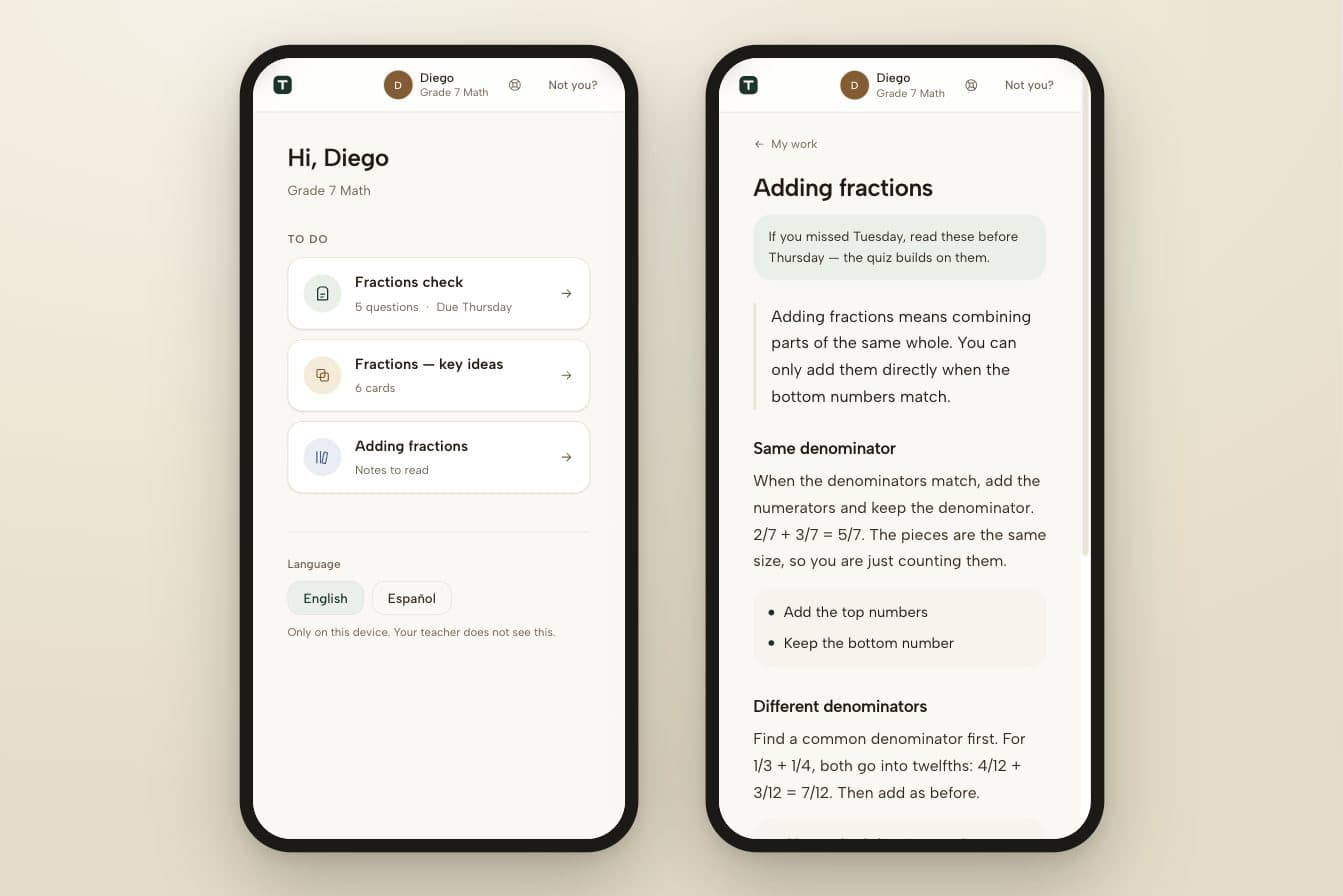
On the student’s side, the notes sit in their list of work next to the quiz and the flashcards, and open as a page made for reading on a phone. Students join with a class code and a PIN, so a student who was away does not need an email address to catch up.
You do not need an app for any of this. The five pieces work with a folder, a half-sheet and a pen; the app only takes over the parts that are easy to skip at the end of a long day.
Questions teachers ask
What should go in an absent work folder?
A copy of everything handed out, with the student's name already written on it; a short note saying what the lesson covered, what to do and by when; and the notes from the lesson, or where to find them. Handouts alone are not enough — they show what was given out, not what was said.
How many days should students get to make up missed work?
A common rule, and an easy one to remember, is one lesson for each lesson missed. Check your school's handbook first: many set a policy, and a class rule that contradicts it will lose the argument. Whatever the number, publish it once and apply it the same way every time.
How do you manage absent work in high school with 150 students?
Make the routine run without you at the door. Post the lesson's notes and tasks the same day in one place every class knows, keep one labelled folder or tray per period for paper, and have a student in each class fill in the absent slip. Your part shrinks to checking the slip and a two-minute conversation on the day back.
Should students lose marks for late make-up work?
Not for the absence itself, and most school policies treat excused absences that way. If the deadline you set for catching up passes, treat it like any other late work under your usual rule. The aim is that missing a lesson costs the student time, not grades.